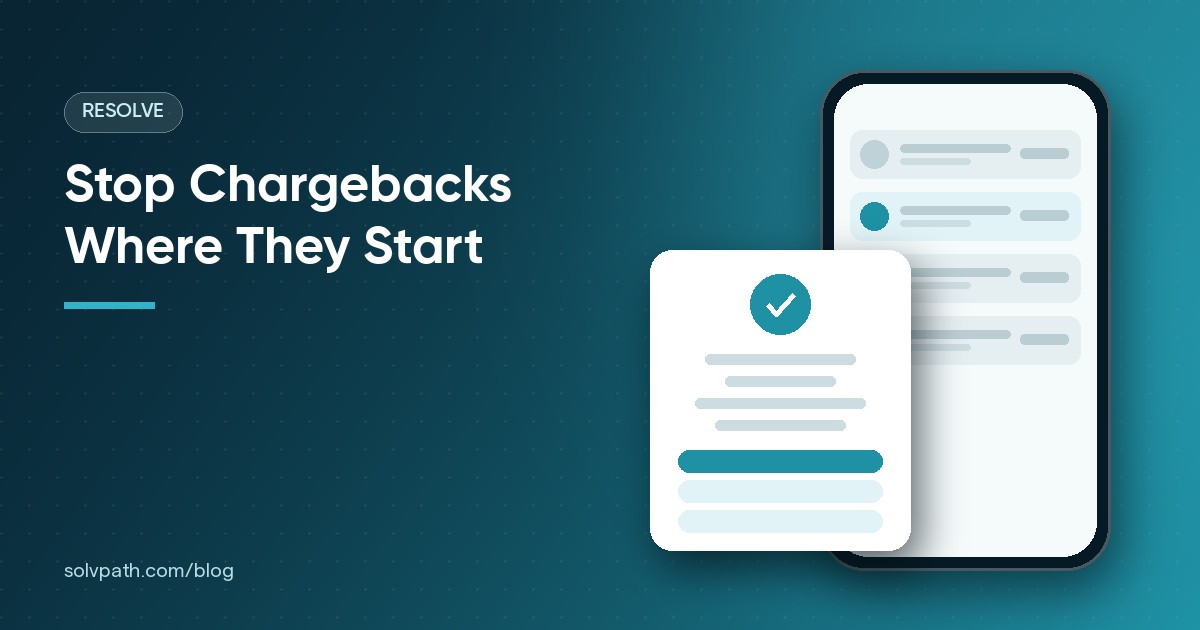
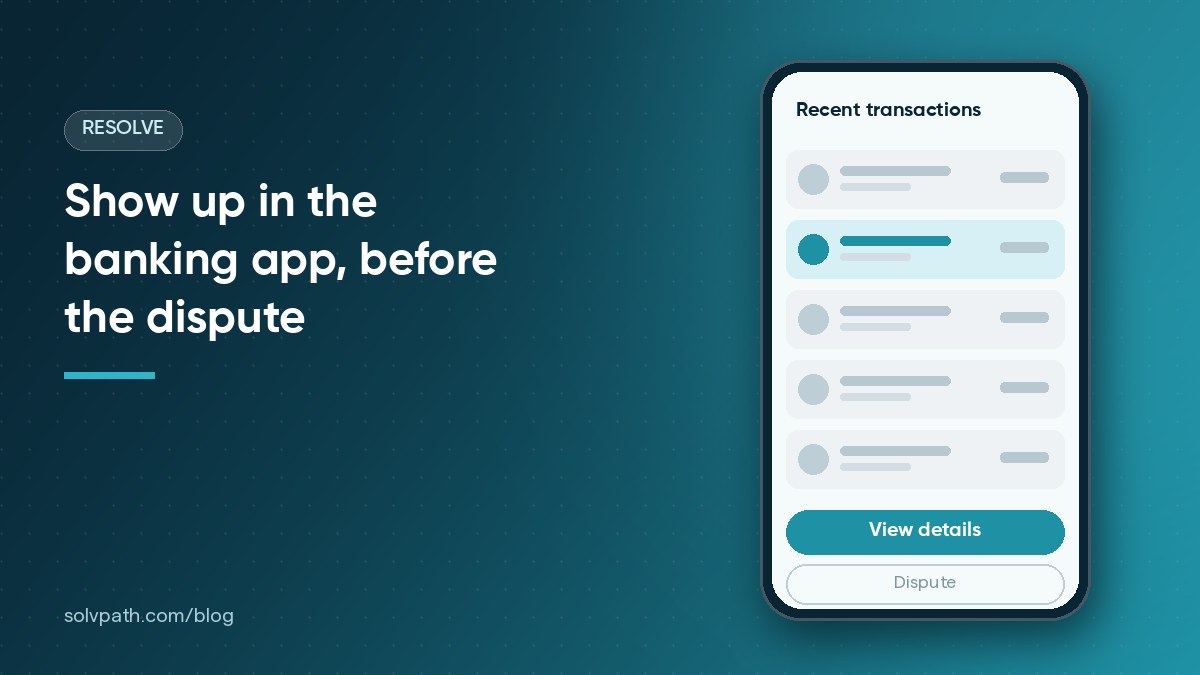
Picture a customer scrolling through their banking app. They spot a charge they don’t recognize: a short, cryptic descriptor and an amount that’s close to something they bought, but they’re not sure.
Right next to it is a button to dispute the transaction. A couple of taps later, your brand has a chargeback.
That customer never emailed you. They never visited your help center.
They may not have been unhappy with the product at all. They just didn’t recognize the charge, and the fastest option in front of them was their bank.
This is the new reality of disputes. In Solvpath’s view, close to 70% of chargebacks now come through banking apps, where a self-service option and two clicks is all it takes to file.
If the bank app is where disputes begin, that’s where your brand needs to show up first. That’s the idea behind a new kind of chargeback prevention, and it’s exactly what Solvpath Resolve does.
Key takeaways
- Many disputes start in the banking app, from customers who never contacted you and simply didn’t recognize the charge.
- Traditional chargeback prevention kicks in after the customer has already decided to dispute.
- Resolve shows a clear, branded receipt right where customers check their charges, with View Order, Buy Again, and Request Refund options.
- You set the refund rules, and a dashboard shows the disputes that almost happened.
Why traditional chargeback prevention shows up too late
Most chargeback strategies kick in after the customer has already decided to dispute. Alerts, representment, and evidence packets all start once the dispute is in motion. By then the customer is frustrated, your team is spending time on paperwork, and the outcome is uncertain.
The better moment to act is earlier, when the customer first looks at the charge and wonders what it is. In that moment they don’t need a fight. They need clarity and a quick way to fix whatever is wrong.
If the bank app is where disputes begin, that’s where your brand needs to show up first.
What Solvpath Resolve does
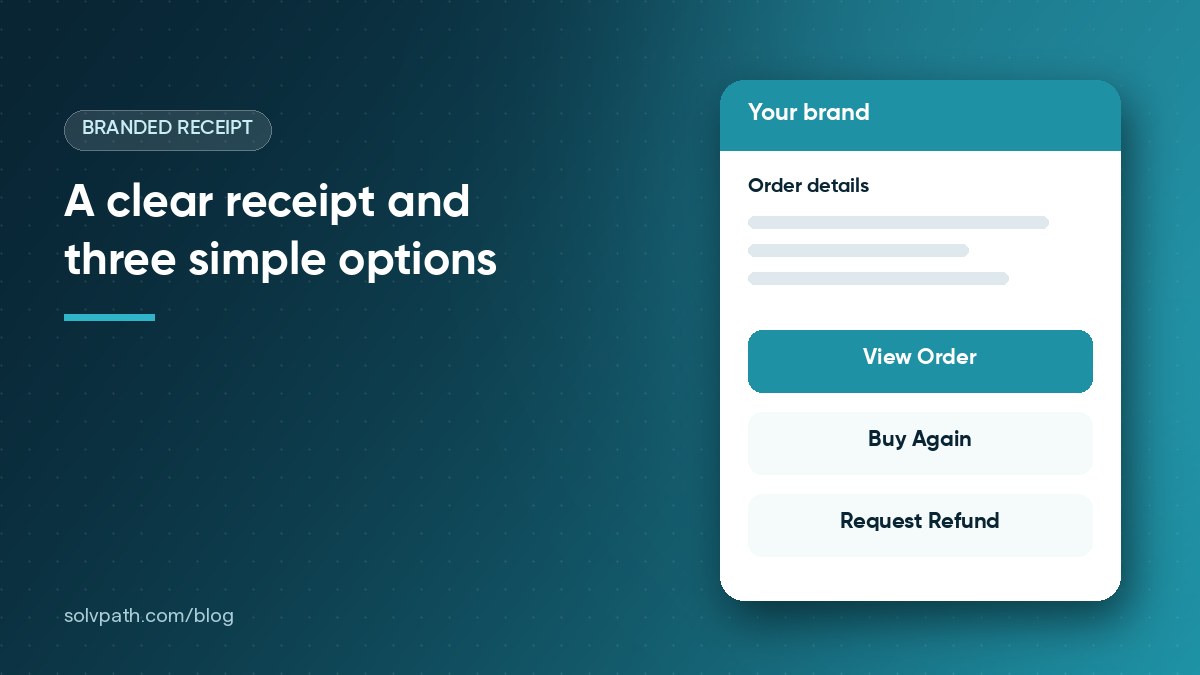
Resolve is Solvpath’s chargeback-prevention product. When a customer looks up one of your charges in their banking app or online banking, they see a clear, branded receipt with their order details, right where they’re checking their charges. Instead of “Dispute,” the natural next step becomes “View details.”
From that receipt, customers get three simple options:
- View Order: go straight into their Solvpath customer portal with the order already identified, so they can track the shipment, modify the order, or manage their subscription. There’s no login hunt, no support ticket, and no reason to call the bank.
- Buy Again: once customers recognize the purchase, many simply want more. Resolve loads their previous order with name, address, and saved card pre-filled, so reordering takes one tap.
- Request Refund: the one option governed by rules you set, so even a refund happens on your terms instead of the bank’s.
Transparency first, then a solution
Resolve does two things a dispute button can’t. First, it gives the customer transparency: your brand, their order, and what actually happened, at the exact moment they’re confused. Second, it offers a solution instead of a fight.
In that moment they don’t need a fight. They need clarity and a quick way to fix whatever is wrong.
You set the refund rules
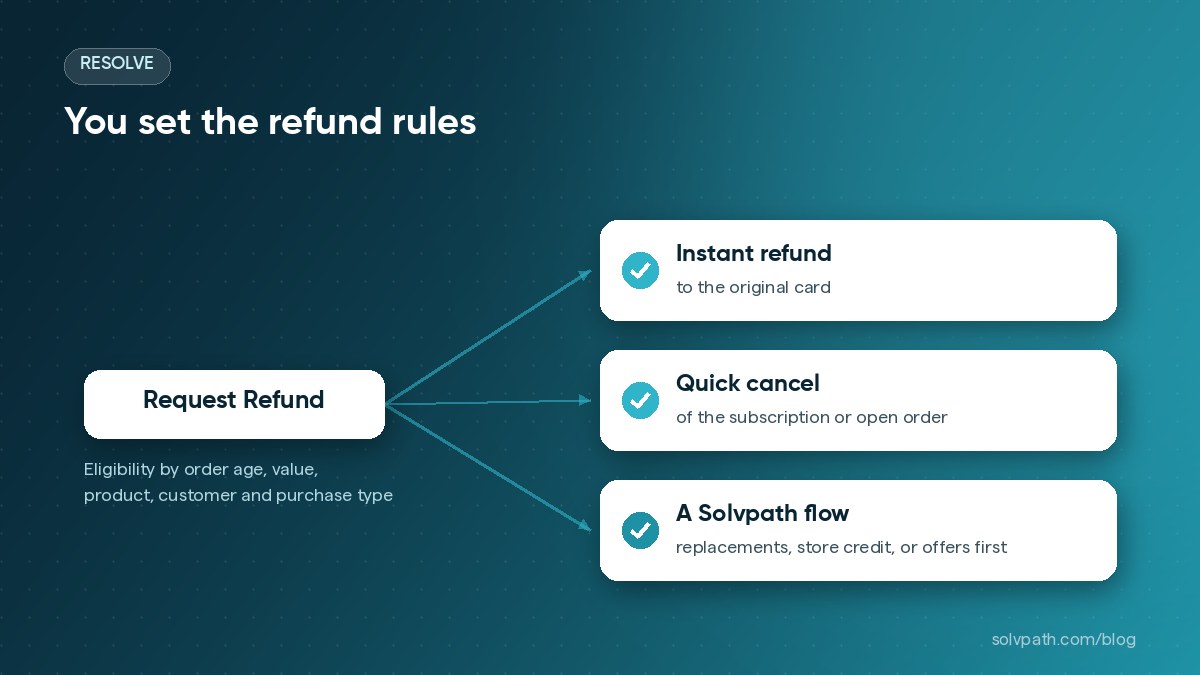
You decide when Request Refund appears and what happens when a customer uses it. Eligibility can be based on order age, order value, product, customer type, purchase type, and more. When a customer requests a refund, you can choose one of three actions:
- Instant refund to the original card
- Quick cancel of the subscription or open order
- A Solvpath flow that runs a quick survey and leads with replacements, store credit, or offers before a refund
That last path uses the same resolution logic that powers Solvpath Returns. If a product arrived damaged, the customer can choose a free replacement in your branded flow. They keep the product, you keep the revenue, and no dispute is filed.
Insight into what happens before the chargeback
Resolve includes a dashboard where you can see every transaction viewed, every resolution chosen, and every dollar protected. For the first time, you get visibility into the moments that used to be invisible: the customer who almost disputed and didn’t.
They keep the product, you keep the revenue, and no dispute is filed.
Why this matters for DTC brands
For DTC and subscription brands, chargebacks hurt more than the refunded amount. They come with fees, operational overhead, and pressure on your processing relationships. Resolve is designed to stop disputes before an alert, so they never hit your VAMP ratio, at a fraction of the cost of alerts and chargebacks.
Resolve helps DTC brands:
- Reduce chargebacks by resolving issues at the transaction level, before a confused customer opens a dispute with their bank.
- Increase revenue by turning would-be disputes into repeat purchases, replacements, and saved subscriptions.
- Create happier customers by giving them the information they need, and a fast way to act on it, the moment they need it.
Subscription brands in particular benefit. A subscriber who forgot about a renewal can manage or adjust their subscription through the portal, often in a branded retention flow, instead of disputing the charge and leaving for good.
A pathway to solutions in a matter of clicks
The name Solvpath is about creating a path to a solution. Resolve is the clearest expression of that idea yet. The customer goes from an unrecognized charge to a resolved issue, whether that’s a viewed order, a reorder, a replacement, or a fair refund, in just a few clicks and without involving the bank.
It also fits into the platform you already use. Resolve connects directly to the platform that runs your store and checkout, so every receipt shows real order data automatically. Every action opens the same branded Solvpath portal your customers already use for self-serve support, retention, and returns.
Implementation is simple: connect your store and payment stack, add your branding, and set your refund rules. The Solvpath team handles setup and testing with you.
How to think about Resolve in your stack
If you’re a founder, CX leader, or retention lead, here are a few questions to ask about your current dispute strategy:
- How many of your chargebacks come from customers who never contacted you first?
- When a customer sees your charge in their banking app, do they see your brand or just a descriptor?
- Can a confused customer reach a solution faster than they can reach the dispute button?
- Do you have any visibility into disputes that were almost filed?
If the answers aren’t what you’d like, the gap is the same for most brands: you’re showing up after the customer has already gone to their bank. Resolve moves you to the front of that moment.
Get in front of the dispute
Customers check their charges in their banking apps every day. With Resolve, your brand is there with a clear receipt and a better path, before a chargeback ever starts.
See how Resolve can protect your revenue. Book a demo with Solvpath or explore Solvpath Resolve.